Joe's Jottings

  • About Me
  • Writing….
  • Too soon for Social Media Experts?

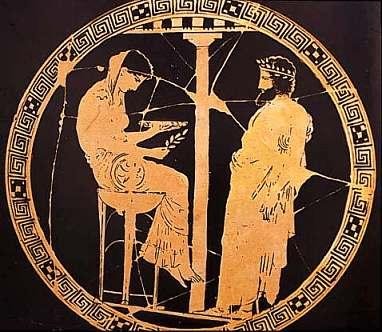
    delphicThe Greeks had the Oracle at Delphi; we have consultants. A recent comment on Twitter suggested that the Apocalypse would be heralded by everyone on Twitter being a ‘Social Media Expert’ – sometimes this is how Twitter feels, with everyone who starts following me appearing to be the online equivalent of those guys who clean your car windows when you stop at junctions…

    It set me thinking – is the whole Social Media field (that part of the media / Internet that deals with interactive and group based applications and developments, like Facebook, Twitter, Blogging, etc.) too young to have real experts?

    Years ago I worked with a guy who hated the word ‘expert’.  His take was that an ‘ex’ was a has been and a ‘spurt’ was a drip under pressure.  Which sort of summed it up… A more widely heard belief in IT is that an expert is someone who’s read 3 pages further in the manual than you have….

    Whilst I wouldn’t go that far, I think that at this stage in the social media game it’s too soon to tell what is true expertise and what isn’t.  It’s similar to the many people who thought they were successful property developers during the UK housing boom; the market added value; they did nothing, and when the market slipped the dilettantes got whacked.

    At this stage in the game I believe the best policy to be to encourage the client to adopt the generally stated ‘best practice’.  This may be a conservative approach, but it allows the client to develop their social media expertise organically and as part of their normal marketing strategy.  Having said that, a recent discussion with a practitioner in the field suggested that we may not yet even have the maturity needed for ‘best practice’ to have evolved, so that approach may not yet be of value.

    So, what is the answer?  Perhaps it’s time to stop going on about Social media as a separate discipline and start looking at the technologies and techniques it encapsulates as being just different aspects of existing business practices.  For example, a company may use Facebook to establish brand awareness and communicate with customers.  OK – that’s a new approach for both Marketing and Customer Care to learn.  Someone else may be using a blog; that Public Relations / the Press Office.  Twittering to announce special offers?  Sales, anyone?

    The technology is new, and there will be a steep learning curve, but the business processes being supported are the same as we have seen in businesses for the last 60 years.  Any technology or technique applied to a business must surely have one objective; to ultimately increases the value of the company or organisation to it’s stakeholders.  We’re just using new methods, which means that we’re going to have to learn them.  Most of these technologies are so cheap to implement (and are usually pretty straight forward to set up in the first instance) that perhaps we just need to try a few different approaches out and take note of what works for us, and then implement what works, rather than expect ‘expert’ guidance to solve all our problems.

    In the classic comedy series, The Hitch Hiker’s Guide to the Galaxy’ the only guidance offered to cultures that hadn’t yet mastered the new technology of fire was ‘Keep banging the rocks together’.

    Good advice.

    January 7, 2010
  • Get the habit!

    bghabits1If you take a look at the section of this blog that lists posts by the month in which they appear, you’ll see that whilst recent months have been pretty regular, there have been some hiatuses in the past.  Looking back over them I can identify the fact that at the beginning of the period of silence, something happened in the ‘day job’ or in life in general that broke me away from writing the blog post.  And I stayed away from the blog for a while after that for the simple reason that I hadn’t really become habituated to blogging.

    I remember reading somewhere that you have to repeat a course of action a few thousand times before your mind and body really begin to treat something as a truly ingrained habit.  Well, I hope that’s not entirely correct because I’m working on making a daily blog post a positive habit in my life.

    Here are some techniques that I’ve adapted from other places and that I’ll be using to get the blogging habit in 2010.

    Publicise what you’re doing! 

    A friend of mine set up a Facebook group where we could publicise our New Year Resolutions to other group members and see whether we could keep them!  It’s always good to have an audience of people waiting for you to drop the ball! 🙂  You’re making a promise now to others as well as yourself; many people find it harder to disappoint others even in small ways than let themselves down.

    Set a time and a place

    Stephen King, in his excellent book ‘On Writing’, suggests that any writer needs to make sure that they’re at their writing desk / writing place at teh same time every day.  Excellent idea!  It effectively makes an appointment with yourself to be in a place with all the conditions just right for writing.

    Remove Distractions

    Make that appointment with yourself in a place and at a time where it’s possible to remove distractions.  This doesn’t mean working in Monastic silence in a plain white painted room, bare except for a desk, chair and laptop.  It’s more a state of mind – whatever might give you cause to prevaricate – despatch it.  Don’t schedule your writing time around the time that your cats need feeding, the postie arrives, or when you might expect to get phone calls.  If you like to work to music, get your music on your computer so you don’t go grubbing around to find it.  If you like a lot of tea or coffee whilst you blog, get a thermos if you need it.

    Set a SMART target

    I set a target of a minimum of one blog post of between 400 and 600 words a day.  It’s a SMART target because it’s:

    1. Sustainable – I reckon I can do this day in, day out.
    2. Measurable– it’s easy to see if I’ve hit the target. 400-600 words.
    3. Action-oriented – you gotta DO something, not talk about it! I will have at least one blog post to point at.
    4. Relevant– the target you set yourself should be relevant to your ultimate goals.  It’s relevant to my aim of generating a popular blog.
    5. Timely – should have a timescale attached to it. It happens every day.

    So – there you go!  Join me in making good habits in 2010!

    January 6, 2010
  • Crazy, obscene or good investment?

    entropiaEvery now and again I come across something online that leaves me staggered, infuriated and thoughtful in reasonably equal measures.  The other day I encountered this little gem – a chap has spent $330,000 on a ‘virtual space station’ in an online computer game.  Yep, that’s right – a third of a million dollars on stuff in a video game.

    I was actually quite surprised to read that back in January 2009 $600 million was invested in virtual worlds, and that in China ‘virtual currency’ is a $2 billion industry.  Scary.

    OK…I’ll walk you through my thought processes now.  My first impression was ‘WTF? Is this man crazy?’  After all, I’m someone who thinks that spending thirty quid on a video game to be the height of extravagance.  I already started worrying about how his email inbox was going to cope with all the letters from long lost Nigerian relatives wanting to share money with him – after all, they probably reckon that anyone who spends money like this must be easy pickings for a 419 scam.  Next up came ‘This is truly obscene.’  Now this is obviously a personal judgement of mine – I do think spending $330,000 on a piece of game terrain is pretty dire when the world’s in the state it’s in, but it’s his money, he’s earned it, so that’s his judgement call.

    Now, assuming he’s not crazy – and anyone who’s gathered together $330,000 in disposable income is unlikley to be totally barking, that leaves us with teh thought that at least he believed he’s got a good investment opportunity.  And, putting my own moral and ethical scruples aside for this post, he may be on to something.  The figures quoted above are pretty big numbers.  The Swedish company who run teh Entropia game have obtained a ‘real world’ banking licence, allowing them to run a bank.   Given that the in-game currency has a fixed conversion rate to the US Dollar, it’s a good move for the company.  Second Life, whilst not having the hype it once benefited from, is still an environment in which people buy and sell virtual goods, and most large scale multi-player games have some means of making real money (even if they’re frowned upon by the game designers).

     In other words, there does indeed appear to be money made in them thar virtual environments.  The owner of the Space Station is now in a position to try and make money from people who wish to run virtual businesses in his station, and will no doubt think of other means of leveraging his investment.  Of course, the whole model depends upon people having Internet access, machines capable of running the games, disposable income to play the games and further disposable income to buy in to resources in the game – like rents for space on a virtual space station.  I think I’d be happier with the investment opportunities offered by the online gaming world in a less recession-struck world.

    But thinking on the positive side…to build a virtual city you don’t have to destroy a forest!!

    January 5, 2010
  • Incompetent or Dishonest – the new TV Game Show for 2010

    blackmail_smallGood Evening, and welcome to this week’s edition of ‘Incompetent or Dishonest’, the new game show where YOU get the chance to decide whether our elected representatives and civil servants are just a bunch of incompetent dorks or whether they’re actually criminally inclined thieving bastards!  We have our usual prizes – a box of pre-completed P45s held here by the delectable Suzanne from HR, and a box of pre-completed Arrest Warrants held by our own boy in blue, Chief Inspector Plod of the Yard!

    This week, our contestants are all Ministers and Civil Servants responsible for Immigration and Employment  Policies, who’ve been chosen from the many eligible Government Departments to argue for their liberty and careers!  The lucky winners get a P45 and freedom, the not so lucky losers get a stretch in Wandsworth Prison!

    Let’s go to our research department to find out a little more about this weeks contestants…. 

    There has been a depressing tendency in the last year or two for our dear Government (and their supporters across the nation) to find themselves in various embarrassing situations due to illegal immigrants being employed in various public sector jobs.   It’s not a good record for HMG – let’s just take a look:

    We don’t want to embarrass the Government too much, so let’s just look at the last couple of years… Starting off back in 2007 with illegal immigrants being able to get jobs in the Security industry.   In September 2009 Baroness Scotland is found to have employed an illegal immigrant as a housekeeper…. In November 2009 we have illegal immigrants as NHS cleaners.   And today we have stories of more illegal immigrants working for the Home Office and the NHS.

    Oh dear…not a good record is it?  Just how difficult can it be to check someone’s paperwork when they apply for jobs in the Public Sector?  After all, when many people apply for work these days one of the first things that is requested is a copy of your passport or other papers proving you are entitled to work in the UK.  Now…if you think that our brilliant civil servants aren’t checking the paperwork, or that the procedures are not being followed, you should text ‘Incompetent’ to our hotline.  On the other hand, if you think backhanders are being taken, or people are deliberately letting folks through the screening process for some reason even if they’re not entitled to work in the UK – text ‘Dishonest’.

    If some of our contestants look like winning an Arrest Warrant, they can choose to play their Joker, in which they can pass the blame on to some minimum wage minion and escape with their sorry necks.  And in a new feature for this series of Incompetent or Dishonest we give you viewers the chance to text ‘Treason’ to our hotline; if a contestant gets enough ‘Treason’ votes they’re off to The Tower!

    So…let’s play ‘Incompetent or Dishonest’ – and remember….ministerial P45s mean ‘New Government’!


    January 4, 2010
  • The last freedom moped from nowhere city….

    2009_07_08_iran_01Back in the 1980s there was a sit com on British TV called ‘The Young Ones’, which was based in a student house and followed the surreal adventures of the students who lived there.  One of the characters was a rather pompous, arrogant, wannabe anarchist called ‘Rick’, who was constantly going on about revolution, and whose ratherfatuous comments about politics gave rise to the title of this piece…

    As my life unfolded and I became involved in left-wing politics in teh 1980s, I encountered a fair number of ‘Ricks’ – folks who were full of talk about how we should pass a resolution condemning some organisation or country or other for their actions but who were surprisingly absent when it came to the grunt work of winning elections to put ourselves in a position where we could at least effect change.

    And Ricks are still with us today, in the electronic world.  I came across this piece from the Telegraph – ‘The fatal folly of the online revolutionaries’ and was reminded of the posturing of Rick and the other Ricks I have known.  The bottom line is that the Iranian Security Services now carry out ‘deep packet inspection’ of a lot of Internet traffic, which allows them to see where traffic originates from and where it’s going, as well as content.  Which means that if someone in the West sends a supportive email message, a one to one Tweet, converses by MSN – it increases the chances of the Iranian authorities identifying the recipient and taking action.  Much of this sort of intelligence work relies on a lot of traffic between ‘targets’ that can be identified and analysed.

    So, being a slightly thoughtless, well-meaning, armchair revolutionary encouraging someone in  Iran to take action against the Government via personal message can get someone at the sharp end killed or imprisoned.  Real life, as they say, is a bitch.  A recent retaliation against Twitter probably got more news footage than many of the deaths that take place in these riots, which tells us something about the priorities of our own news services.  A further piece about ‘Twitterised Revolution’ is here.

    Now, this doesn’t mean that support cannot be offered – it means that we just have to redress the balance of risk.  And activity should not be mistaken for effective action.  My initial thoughts:

    • There are folks in Iran (and other more authoritarian and totalitarian regimes than our own) who are risking life and limb to get video footage and stories out of of their countries, and succeeding.  If you’re wanting to help the cause, when you come across this stuff promote it via your own Social Media sites, blogs, etc.  Take a look here.
    • Campaigns like the recent one to turn your avatar green for Iran are great for awareness raising.  And they don’t impact individuals ‘over there’ but offer visible support to users of the services.
    • Work within the laws of our own country, and via the political processes here (wherever here might be for you!) to raise awareness, find out what your own Government is doing and vote accordingly next time around if you don’t like it.  Engage with your elected representatives to put pressure on at a Governmental level.

    By engaging directly with people ‘on the ground’ in these regimes, encouraging illegal activity, you might get someone killed.  You will almost certainly do less good than if you work within your own country.  The folks out there can do with our moral support and the indirect support of our Government and media – they can probably do without armchair revolutionaries throwing virtual bombs and pissing off the local authorities who then retaliate with real bullets.

    Sitting back and engaging in the above suggested activities may not be sexy or cool, it may even be regarded by some as cowardly – but if you want to play at being Rick, just think about the consequences for those on the other end of the connection.  Don’t forget that the aim of the game is to effect change for those people, not provide Westerners with vicarious thrills. 

    (Image from From http://www.antiauthoritarian.net)

    January 3, 2010
  • Why do people talk purple prose?

    OK.  It’s Saturday evening, snow’s falling, I’m caffeinated up on tea and chocolates and have just watched a ‘Quantum of Solace’ on TV.   When I first wrote the title for this piece I have to say that the title of this piece changed from one that involved Anglo-Saxon expletives through to the mild sentence you now read.  So, what has made my bile rise to the tip of my tongue?  What horror have I seen inflicted on the world that has driven me to put fingers to keyboard?  It’s purple prose like this:

    ” … is a builder, a transformer. He cherishes the electricity and challenge of growing and leading a team in the pursuit of audacious goals. The more daunting the mountain, the more exciting the adventure.”

    Are we talking about an oil-field trouble-shooter?  A leader of intrepid explorers?  Captain of Earth’s first Interstellar Spacecraft?  No.  It’s a marketing fellow.  Now, if this works for him and his business, so be it.  But come on folks, be honest.  Do we really go around talking to each other like this?  Should we go around talking to each other like this?

    I’m not totally free of this sort of thing myself – my own CV features:

    To make full use of my unique range of IT and management skills and interests to develop technically advanced information systems that provide business advantage to users. […snip… ]As well as my technical ability, my written and verbal communication skills, project management expertise, team leading, mentoring and management skills allow me to make a consistently valuable contribution to any IT project.

    It’s not perfect, but it does say what my professional services supply.  I’m not climbing mountains or fording mighty rivers; I’m doing stuff with computers and management consultancy, for crying out loud.  Don’t get me wrong – a Mission Statement is a valuable tool when phrased appropriately and meaningfully.  One excellent definition of a Mission Statement I’ve come across is:

    To provide one simple, singular directive that can serve as a guidepost to solve any problems that emerge.

    – the Mission Statement becomes a compass for your life or your business.  I have a personal one (and personal it shall stay!) that I use to try and keep me on the straight and narrow.  Keeping it simple and straight forward, whilst encapsulating the core values that you want to live and / or work by is crucial.  The woolier the prose is, the more purple the writing, the more ‘wriggle room’ there is in your Mission Statement and the less valuable it is at providing that ‘compass’ when things get tough.

    My favourite Mission Statement (Well…maybe more of a statement of intent…)  is still from the film ‘The Mummy’ – “Kill the creature, save the girl”. 

    And the heroes do exactly what it says on the tin; no wriggle-room, just get on with the job.

    January 2, 2010
  • Blogging the Party Line?

    parliamentIncendiary political blogger Guido Fawkesmade an interesting observation the other day that the Left are once again saying that 2010 will be their year to dominate the Blogosphere in a run up to an election and beyond.    As he points out, they’ve also said this in 2007, and I remember similar thoughts being voiced when Labour first started playing with computers for campaigning back in the 1980s (as an ‘Old Labour’ member I was involved with Computing For Labour for a while, on and off up to my exit from the party in 1996).

    The article started me thinking about the whole business of political blogging.  Just to provide a quick view of where I personally come from politically…. I come from the left, but have found myself for the last decade inhabiting the territory of the Libertarian.  I’ll get the joke out of the way now ‘Being a Libertarian is like being a Liberal; you can come up with lots of ‘out there’ policies because you’ll never have to bear the responsibility of putting them in to action’ 🙂  My own take on Libertarianism is minimum Government, maximum possible empowerment of communities to provide services locally, with national Government providing only the necessary services and infrastructure that it would be inefficient for local communities to provide. On a personal basis I try to practice what I preach by involving myself in local organisations and efforts to develop local economies and local structures of service provision.

    Enough about me – back to the blogging.  When a party member blogs they almost by definition need to watch what they say if they intend to adhere to the Party Line.  Whilst this may not be important for the ‘rank and file’, if you’re anyone with influence or position in the Party, stating anything that is not doctrine will probably get you a slap on the wrist (or a boot up the bottom) from the powers that be, especially when it is viewed as being important for all to be singing from the same hymn sheet.  Which frequently makes a political blog by ‘well known’ politicians as interesting as reading excerpts from the Manifesto document of that party.  It’s highly unlikely you’ll find anything truly radical and rare that you’ll find anything that confronts the existing status quo within the Party. 

    My own attitude towards political blogging is to pay more attention to the more ‘independent thinkers’ outside the mainstream political parties, and also pay more attention to the ideas irrespective of who posts them.  Politics isn’t about politicians or political bloggers, spin-doctors, media pundits or journalists; they just practice the business that modern mainstream politics has become.  So, my advice would be to treat most blogs by ‘professional’ politicians as marketing efforts for the brand they’re working for.  As for the other political blogs – go for ’em!  Try them out, whether you agree or disagree with their viewpoint.  It’s ideas that are important, not which doctrine they come from.  There’s a good list of Political Blogs compiled by Iain Dale here.

    Real Politics is about our day to day lives, and how we are permitted to live them – whether that permission comes in terms of laws, resources, money, media influence.  The old labels are becoming just that – labels on political product that is less and less relevant.  Perhaps the real winners in the political blogosphere for 2010 will be ‘none of the above’ but the ‘Real Politics’ blog posts of the rest of us.

    January 2, 2010
  • The Social Media Numbers Game

    twitter-logoI’m old enough to have used an address book and still have a Rolodex on the phone table.  When I actually sit down and think about the people with whom I have reasonably regular ‘quality’ contact in a 3 month period, either electronically or face to face, it probably amounts to no more than a hundred or so.  I guess it’s safe to say that in the world of networking I’m a ‘quality over quantity’ sort of fellow.  I’ve never been a great collector of large numbers of business cards or people details – collections are fine for stamps, coins and locomotive numbers but are kind of creepy for people. 🙂

    Back in the late 1990s / early 2000s I used a networking site called Ecademy – I stopped after a while because it seemed that people were making contact with you purely from a sales oriented viewpoint.  Allow me to explain – if I’m interested in AI, and someone brings something to my attention that’s even vaguely related to the field – that’s cracking!  That’s exactly what I’m there for – and hopefully I’ll be able to reciprocate.  On the other hand, if someone steams in with a ‘Hi, I’m Fred, I’m in marketing, blah, blah, blah’ I get the feeling I’m receiving a boilerplate message which is likely to end up as a boiler room selling attempt.  The site seemed to encourage numbers of contacts over quality – and that’s one of the reasons why I eventually jacked it in.

    I’ve noticed in recent days that I’m being followed by people who are following thousands of others.  And the odd thing is most of them appear to be selling something that is as relevant to me as a comb to Sir Patrick Stewart.  The ‘Bio’ of one such follower (soon to be ex-follower in my daily purge) – “A Business Dedicated to providing free online MLM training videos, articles, books and webinars”.  If I received an email like this I’d call it spam – pure and simple.  I know that Twitter has policies around spam, but my point is that most folks following 20,000 people seem to be in the MLM, ‘sales and marketing’, ‘social media consultancy’ sort of areas.  They’re cold calling – they sure ain’t networking.

    Bottom line – there is NO WAY, realistically, that the content generated by the 20,000 people these bods follow is ever registering in any meaningful manner with these people – I assume it’s simply being harvested electronically and searched for keywords that might suggest a sales lead. 

    Joe’s categorisation of Twitter users…

    1. Vast number of followers, smallish number of followed – publisher / celeb.
    2. Vast number of followers, vast number of followed – probably sales / mass marketing
    3. Smallish followers, large number of followed – probably spammer
    4. Smallish followers / smallish followed – personal / business networking

    OK – it’s not a brilliant classification but it works for me.  Just watch out if you’re in category 2 or 3 ‘cos I’m binning you!

     Whilst I was drafting this yesterday, I came across this piece on the same topic:  http://juliorvarela.wordpress.com/2009/12/28/when-twitter-numbers-are-meaningless/

    Don’t get too hung up on your numbers on Twitter.  If you’re following lots of people, just check WHY.  Do they add value to your day?  Amuse / entertain you?  Educate you?  Guide or enlighten you?  If not, ditch ’em.  And those following you – just take a look at their numbers and think about what I’ve said.

    And I hope you don’t chuck me off your lists. 🙂

    January 1, 2010
  • What goes in to a blog?

    I recently came across a couple of articles about blogging. Well, I’ll be honest – they were in my Twitter feed and I took a look at them to see what other people’s views were on the subject of content in blogs. It was sort of distressing to me – according to those particular authors I’m doing absolutely everything wrong.  For example:

    • I mix subjects – I have technical stuff sitting side by side with personal stuff.
    • I rarely have articles that have ‘xxx ways to do yyy’ as the title.
    • I definitely don’t have a marketing plan for Joe’s Jottings

    There were a few other items that cropped up in these pieces – enough to make me sit back in my chair (carefully moving Marvin the cat form behind me – he’s a big fellow and would not tolerate being squished) and think about this article.  What goes in a blog?

    I guess the bottom line answer is ‘What’s the blog about?’  If you’ve set out to write the world’s authoritative blog on Mousterian Variability then you will have a fairly shrewd idea of what’s good.  A blog entry on your trip toLe Moustier is good, 500 words on your views on nearby spa towns, not so good in the consistency stakes.  But if you’re writing a personal blog, then I’m afraid that as far as I’m concerned it should be a case of ‘publish and be damned’ – what you want to go in, goes in.  After all, one definition of the word ‘blog’ is very straight forward:

    “A frequent, chronological publication of personal thoughts and Web links”

    and applying this definition I hit the spot a little better.  Joe’s Jottings is indeed chronological, consists of personal thoughts and web links, and strives to be frequent.  🙂

    Unfortunately for the digerati and the marketing types out there, my personal thoughts do tend to wander around somewhat and very rarely do they include a line that says ‘How can I market / monetise Joe’s Jottings’ and even less frequently do I bother about whether I think about technical stuff after non-technical stuff, and whether I remembered to include a 5 point list in my thinking every 20 minutes.  People’s personal thoughts, to me the basis of a personal blog, don’t run like that.  They’re the stream of everyday consciousness that makes us the interesting souls that we are.  When we start filtering the contents of what is supposed to be our personal thoughts and writings to suit marketing demographics and audience statistics then we need not worry about censorship of the web – we’re already doing it nicely ourselves.

    George Orwell wrote a column for the Tribune newspaper in the 1940s called ‘As I Please’ that would find political pieces next to home handyman tips, for example.  And that was the way that Orwell thought – he was a writer, a political thinker, but also a chap who had other interests that he felt were important enough to him to get featured in his ‘weekly bloggings’ for Tribune. 

    Ha!  My question answered, indirectly by George Orwell.  What goes in to a blog?  Whatever you like…as you please.

    December 31, 2009
  • When does a Jedi play a banjo?

    yodaSome years ago I worked for a large UK bank-assurer as a contract software developer. One project that I became involved with was to provide a bug tracking / change management system. As with all software systems, we decided to give it a ‘cool’ name and someone in the team suggested ‘Jedi’.

    After stifling an inward sigh and wondered how I, a Star Trek fan, had ended up in a world full of Star Wars geeks, I asked the chap who originated the name why he’d thought it was a good name.  The answer was simple; in this context, Jedi was going to stand for something. Jedi actually stood for Just ‘Effing Do It! After that I had no problem with the name at all.

    Just ‘Effing Do It – as one of the world’s great procrastinators, anything that helps me kick the habit has to be worth thinking about, and as an acronym JEDI is great.  In the intervening years I’ve called upon JEDI many times, and I think that it has helped me break at least part of my procrastination habit.  By analysing my activity on projects (one reason why I keep a log book) I found that the actual time spent on various tasks is quite often significantly less than the time I think I might spend upon them.  However, I spend a fair amount of time thinking about doing the job, planning it, worrying about it, determining that I haven’t the time to do it, doing something that’s urgent but not important, doing something that’s neither urgent or important, drinking tea and, in extremis, having a bath.  In other words, the way of the procrastinator can be strong in me!

    Procrastination is probably my biggest time-bandit; the putting off of tasks for some indeterminate and usually inadequate (and often non-existant) reason.  I now recognise that some of the tasks I put off are tedious, some just seem overwhelmingly difficult, and others – well, some are just so unpleasant that I want to ignore them altogether.  The latter tasks can just keep nagging away at you, though, and this is where the concept of a banjo playing Jedi comes in useful…

    Banjo stands for Bang A Nasty Job Off – in other words, if you have a stinker of a job to do, that you find unpleasant for any reason, the best way to get it out of your life is to get on with it as effectively as possible – in other words, Jedi.

    So there you have it – you want to get ahead in this world, then start contemplating banjo playing Jedi knights.

    And on that note…where’s that code I have to write today?

    December 30, 2009
←Previous Page
1 … 26 27 28 29 30 … 39
Next Page→

Twenty Twenty-Five Legal Pad

Designed with WordPress