Joe's Jottings

  • Category Wordmap
  • About Me
  • Writing….

Tag: george orwell

  • Online Exhibitionists affect privacy for us all…

    bigbrotherI came up with the title for this piece after reading this article on the BBC Website about people who the authors of a paper called ‘online exhibitionists.  The idea is that much privacy legislation is based around the idea of what levels of privacy someone can reasonably expect to have when out and about in public.  So, if we live in a world where people are relatively circumspect, photography and publication in public places is rare, then we can expect to have some right to privacy based on a reasonable expectation that you won’t be photographed.  If you’re a celebrity, then your expectation can be less because you might reasonably expect to have people taking pictures and hassling you because the nature of your work has put you in the public eye.  Right or wrong, that’s the way it’s tended to run over recent years.

    Of course, with the rise of Facebook, Twitter and other social networking sites, everyone has effectively become a ZZ List Celebrity within their own group of friends or the town in which they live in.  In fact, it might be said that by the very act of registering an account with something like Facebook, we’re actually turning our backs on our right to privacy – and that’s wrong.  I recently covered this sort of ground in my post ‘What happens in Vegas, stays in Vegas’. 

    In my original plan for this piece, I was going to elaborate on this issue – but then a Tweet made me aware of a quote from Mark Zuckerberg, founder of Facebook – “The Age of Privacy is Over”.  Here it is. He states that were Facebook being set up now he’d default all our privacy settings to Public.  Now, I quite like Facebook and have taken my privacy settings to a level with which I’m happy – but I can see Facebook losing users if they start regarding our lives as ‘entertainment feed’ for the real time Web.

    Well, given that Zukerberg’s company rely on us letting go of a bit of privacy to communicate with each other, I can see that, in the words of Christine Keeler, ‘He would say that, wouldn’t he?’

    But what has scared the bejabers out of me this morning is to see comments from some digital media folks along the lines that they feel it might be rewarding for us to ‘hide less’.  I’m sorry?  I can only imagine that those who say such things have never been on the receiving end of online stalking, have never been harassed for their sexuality expressed online, have never suffered a rock through their window from thugs because of their politics or race. 

    It may appear to be ‘hiding less’ for people in the business but it can be a matter of staying alive for some.  Even when these people do not have online profiles, their privacy can be breached accidentally or deliberately by others who do.

    Maybe the world of Big Brother has come 25 years late and is being self-inflicted.  Just how many people out there right now are echoing in their attitudes the final chilling words of ‘1984’:

    “But it was all right, everything was all right, the struggle was finished. He had won the victory over himself. He loved Big Brother.”

    I came up with the title for this piece after reading this article on the BBC Website about people who the authors of a paper called ‘online exhibitionists.  The idea is that much privacy legislation is based around the idea of what levels of privacy someone can reasonably expect to have when out and about

    Read more

    January 10, 2010
  • What goes in to a blog?

    I recently came across a couple of articles about blogging. Well, I’ll be honest – they were in my Twitter feed and I took a look at them to see what other people’s views were on the subject of content in blogs. It was sort of distressing to me – according to those particular authors I’m doing absolutely everything wrong.  For example:

    • I mix subjects – I have technical stuff sitting side by side with personal stuff.
    • I rarely have articles that have ‘xxx ways to do yyy’ as the title.
    • I definitely don’t have a marketing plan for Joe’s Jottings

    There were a few other items that cropped up in these pieces – enough to make me sit back in my chair (carefully moving Marvin the cat form behind me – he’s a big fellow and would not tolerate being squished) and think about this article.  What goes in a blog?

    I guess the bottom line answer is ‘What’s the blog about?’  If you’ve set out to write the world’s authoritative blog on Mousterian Variability then you will have a fairly shrewd idea of what’s good.  A blog entry on your trip toLe Moustier is good, 500 words on your views on nearby spa towns, not so good in the consistency stakes.  But if you’re writing a personal blog, then I’m afraid that as far as I’m concerned it should be a case of ‘publish and be damned’ – what you want to go in, goes in.  After all, one definition of the word ‘blog’ is very straight forward:

    “A frequent, chronological publication of personal thoughts and Web links”

    and applying this definition I hit the spot a little better.  Joe’s Jottings is indeed chronological, consists of personal thoughts and web links, and strives to be frequent.  🙂

    Unfortunately for the digerati and the marketing types out there, my personal thoughts do tend to wander around somewhat and very rarely do they include a line that says ‘How can I market / monetise Joe’s Jottings’ and even less frequently do I bother about whether I think about technical stuff after non-technical stuff, and whether I remembered to include a 5 point list in my thinking every 20 minutes.  People’s personal thoughts, to me the basis of a personal blog, don’t run like that.  They’re the stream of everyday consciousness that makes us the interesting souls that we are.  When we start filtering the contents of what is supposed to be our personal thoughts and writings to suit marketing demographics and audience statistics then we need not worry about censorship of the web – we’re already doing it nicely ourselves.

    George Orwell wrote a column for the Tribune newspaper in the 1940s called ‘As I Please’ that would find political pieces next to home handyman tips, for example.  And that was the way that Orwell thought – he was a writer, a political thinker, but also a chap who had other interests that he felt were important enough to him to get featured in his ‘weekly bloggings’ for Tribune. 

    Ha!  My question answered, indirectly by George Orwell.  What goes in to a blog?  Whatever you like…as you please.

    I recently came across a couple of articles about blogging. Well, I’ll be honest – they were in my Twitter feed and I took a look at them to see what other people’s views were on the subject of content in blogs. It was sort of distressing to me – according to those particular authors

    Read more

    December 31, 2009
  • Gazing in to the abyss

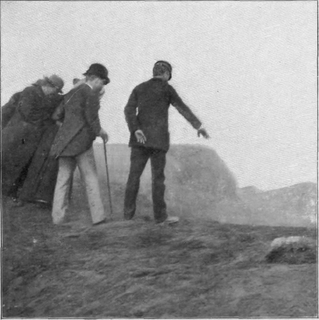
    Looking-Into-The-CraterYesterday’s exploration of  ‘What would George say?’ led me to following up a few points of research and whilst browsing around I came across this quote of Orwell’s:

    Here is a saying of Nietzche which I have quoted before, but which is worth quoting again:

    He who fights too long against dragons becomes a dragon himself;
    and if you gaze too long into the abyss, the abyss will gaze into you.

    ’Too long’, in this context, should perhaps be taken as meaning ‘after the dragon is beaten’.

    The line that struck a chord with me here, and has done for some years now, is ‘the abyss will gaze in to you’.  My topic for today – have we all spent rather too long staring in to the abyss and what have we bought back with us from there?

    I guess a good place to start is with exactly what I mean by ‘the abyss’.  For me it’s that spiritual dark place where your personal and our cultural demons lie.  The trick is that whilst we need to be aware of the fact it’s there, we shouldn’t get ourselves too engrossed in it’s finer geography.   I look at it in the way that CS Lewis spoke of the Devil in ‘The Screwtape Letters’:

    ‘There are two equal and opposite errors into which our race can fall about the devils. One is to disbelieve in their existence. The other is to believe, and to feel an excessive and unhealthy interest in them. They themselves are equally pleased by both errors.’

    Over the years I’ve wandered to the edge of my personal abyss a few times and stepped back.  We all have our personal demons – what matters is whether we give them the freedom to do anything.  Show me somone who claims to have no personal demons and I’ll show you a liar.  And then there are those people whose demons are, shall we say, rather more unpleasant than those that most of us have; the criminal, the depraved, the insane.   The problem that we have today, I believe, is twofold – the abyss is now much wider and deeper than it was even 20 years ago, and it impinges more than ever in to our daily lives.

    In 1984, Frankie Goes to Hollywood asked the question “Are we living in a land where sex and horror are the new gods?’  Back then I think the answer was still ‘yes’, but we didn’t really know what was around the corner. Twenty-five years down the line the abyss comes in to our house courtesy of the Internet.  Without sounding too much like Mary Whitehouse on a Sunday Evening,  the Internet, cinema and TV have increasingly bought the baser instincts of human beings to the forefront of our consideration.  I’m not dumb enough to believe that, in the words of Philip Larkin ‘Sexual intercourse began in 1963 (which was rather late for me)‘.  Interest in the more extreme edges of pornography – whether that pornography is the pornography of sex or that of violence – has always been with us and was usually squirrelled away in the far recesses of most people’s minds for a number of reasons:

    Society was more ‘up tight’ – certain forms of behaviour or artistic expression were simply regarded as wrong and tended to be either illegalor seriously frowned upon by society.  Sometimes this was right (IMO) and othertimes it was ridiculous.  But there were boundaries set.

    1. There seemed to be less moral relativism – there seemed to be much more of a concensus view in society as to what was ‘right’ and ‘wrong’.
    2. Extremely violent pornography of graphical violence was difficult to get hold of.
    3. Anyone who DID have extreme interests was typically on their own; they were in no position to talk about it with friends who might be horrified at their interest.

    In these circusmtances, if you went to your abyss, and peered in, and did dwell there a while the risk was pretty minimal for society as a whole.  Your trip was a private one, one not to be shared with anyone.  And for most of us there was the knowldge that certain things were, to put it bluntly, totally wrong.

    The Internet has brought a lot of good in to people’s lives, but it has also amplified the potential for people to gaze deeper and for longer in to the abyss.  It’s had two main impacts:

    1. Extreme sexual and violent imagery is available to everyone more easily than ever before in history.
    2. The sheer scope of the Internet means that it’s inevitable that no matter how extreme a person’s ‘interests’ are, it’s almost inevitable that somewhere in the 1.7 billion Internet users there is someone else with the same interests, and a web site delivering up media to accomodate those interests.

    The impact of these two facts is that people with particularly unpleasant demons in their abyss now find, to their mind, their beliefs and views  validated by the existence of those websites and users.  This permits these individuals to look in to their personal abyss and see nothing wrong with what they see there, and hence feel encouragement to express their views in to the world.  It’s not trendy to be in favour of censorship, but the validation of perversity that seems to be increasingly common surely cannot be healthy for society as a whole.

    The phrase ‘People of the Abyss’ was used by Jack London as the title of a book he wrote in the early 1900s about the poverty of the East End of London;  I believe wholeheartedly that we’re now generating a new breed of people of the abyss – those who’ve started hard and long in to the depths of their abyss, and have bought back their personal demons with them in to the workaday-world.   This new breed of Abyss Dwellers are to be feared and shunned; their moral compass seems to be dictated by ‘it works for me and is no one else’s business what I do’ and they exhibit a lack of respect for the social codes of the society in which they live.

    It’s not just extreme sex and violence that is an issue; I’ve just spent some time watching scenes of anti-fascist demonstrators protesting outside the BBC about the appearance of Nick Griffin of the BNP on BBC’s Question Time.  There is soemthing ironic about a group allegedly demonstrating to preserve democracy by attempting to censor a TV programme.  Perhaps these anti-fascists who’ve ‘fought the dragon’ are in danger of becoming that which they fight?  In George Steiner’s novella ‘The Portage to San Cristobal of A.H.’ – written in 1981 – a trial in teh South American jungle allows the 90 year old Hitler, who in this novella survived the fall of Berlin, to explain himself.  One comment made is that those who fought agaisnt him have taken on board many of the characteristics of his regime – in other words, by peering in to teh Nazi abyss and fighting the dragon, they’ve fought for too long and brought parts of the abyss back with them, and have now become the dragon which they once fought.  Defending democracy is a delicate balancing act; you should not get so involved in the way of the enemy that you forget that you fight against that you forget the positive characteristics of what you’re fighting for.

    In his novella, Steiner has a character say:

    “There shall come a man who […] will know the grammar of hell and teach it to others. He will know the sounds of madness and loathing and make them seem music.”

    He was, obviously, referring to Hitler in the book but today there are many such people in the public eye and those who we personally may be aware of who might be described in the same way.  Modern people of the abyss who’ve been there and returned with a little more than they bargained for, and who’re determined to further expand their view of the world, and widen the abyss further, expanding the geography of Hell further in to our daily lives.

    I’m a Christian – I think that colours my opinions on a number of topics, and makes me address them from a particular moral and ethical standpoint.  Whether you have an religious beliefs or not I’d simply suggest that you at least become aware of the place of the abyss in your own life; what you choose to do with it when you find it’s location is up to you.  Just remember that having gazed a little too long and deep, you may find that even if you leave the abyss, it may not entirely leave you.

    Yesterday’s exploration of  ‘What would George say?’ led me to following up a few points of research and whilst browsing around I came across this quote of Orwell’s: Here is a saying of Nietzche which I have quoted before, but which is worth quoting again: He who fights too long against dragons becomes a dragon

    Read more

    October 23, 2009
  • What would George say?

    One of the useful spin-offs from the recent (and ongoing purge and tidy) at Pritchard Towers is that every now and again something floats up that makes you think “Whoa, yes, relevant with a capital ‘R’”.  The most recent relevant thing to catch my attention was a copy of Bernard Crick’s excellent biography of George Orwell.    I’m not planning on reviewing the book here, or entering in to a biography George Orwell – that’s what Wikipaedia is for, after all! 

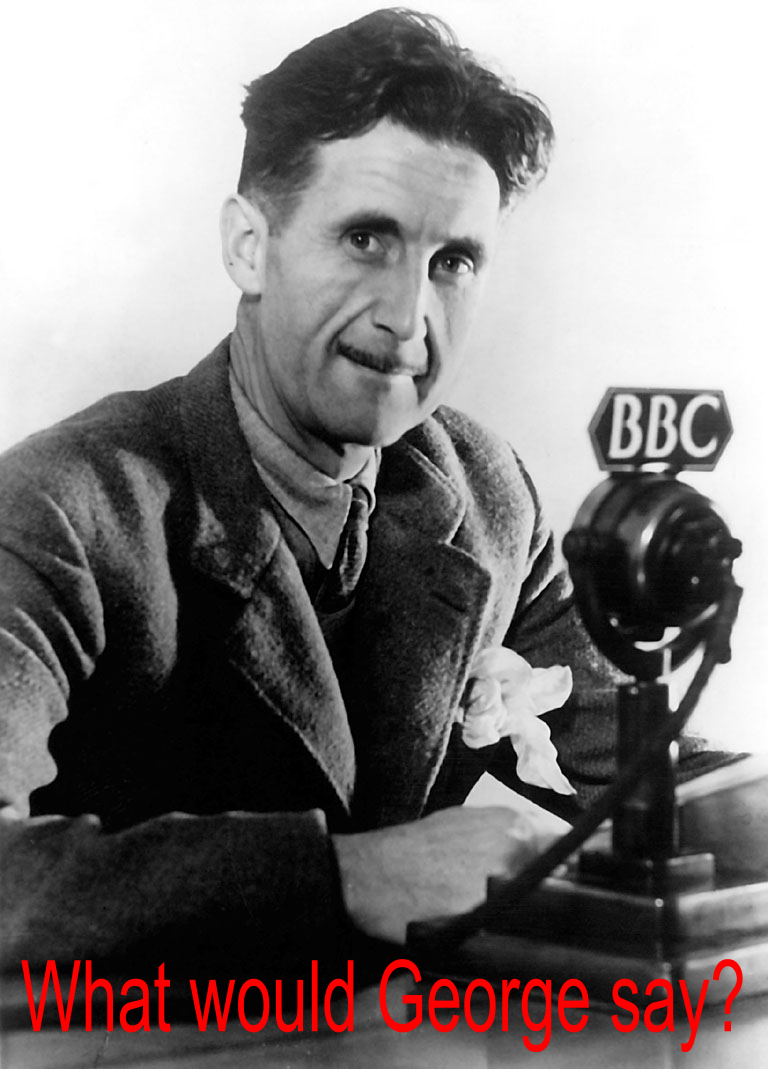
    george-orwellNo, finding that book set off a set of thoughts and conversations with my wife that resulted in me looking at the Britain that we’ve ended up with in 2009 – and I guess by extension the rest of the world – and wondering ‘What would George say?’

    I encountered George Orwell in my teens, through the usual route of ‘1984’ and ‘Animal Farm’,  I can’t honestly remember which I read first, although ‘Animal Farm’ was brought to my attention by my English teacher, a delightful Tory woman who had us read it after we’d finsihed the English Literature sylabus for our year.  We took it in turns to read from the book out loud, then discuss the book; my main memory is of one girl mis-reading ‘the hens capitulated’ as ‘the hens copulated’, which generated a fair amount of sub-Beavis and Butthead guffaws.

    One thing led to another and I eventually read all of his novels, essays, non-fictions and a fair number of his letters.  My admiration for Orwell grew – I regard us both as being members of ‘God’s Awkward Squad’. 🙂  As a semi-professional writer, his essay ‘Politics and the English Language’  gave me the basic rules of English prose that I have tried to adhere to to this day.

    It’s a great shame Orwell died before the specious nonsense that is ‘Political Correctness’ came to pass – I could see him giving the PC brigade a thorough drubbing.  He saw it coming; the essay above and the explanatory notes to ‘Newspeak’  that he placed in 1984 showed his perfect understanding of how manipulating the language manipulates the ability of people to use that language to debate politics.

    By one of those weird coincidences that shouts to a writer ‘You’re on to something here, keep typing!’ I came across this item today.  Put briefly, a High Court judgement states that in some cases the online archives of a newspaper must be modified after a libel judgement, even if the original item in the article is not libellous.  Read the link for details – it’s a strange world we inhabit today.  Winston Smith’s job at the Ministry of Truth would be a heck of a lot easier today than it was in ‘1984’.  Earlier this year we saw the bizarre episode of Amazon’s e-book service removing a copy of 1984 from the e-book readers of Amazon customers,  and New Labour’s penchant for Ministry of Love style surveillance and ID cards is pretty well known.   I’ve also been reading a scary book called ‘Fantasy Island’ about the first 10 years of New Labour which details the half truthes and downright lies that NuLab have foisted on us in true Ministry of Truth fashion about the way our country has been run.  (Worry not…I’ll review that book when I’ve finished it and it’s sunk in a little) 

    So, George would have a truckload of things to talk about today.  Would he stick to newsprint?  Would he blog? Tweet? Facebook? Engage with us on Internet discussion forums (where, no doubt, some of his less politically correct views might disappear within seconds of him writing them!)

    I like to think of him blogging – his ‘As I please’ column for the Tribune newspaper, and many other shorter pieces (and longer ones!!) that he wrote were perfect Blog material.  Just take a look at the lists of articles in the above link – it’s what you might see in anyone’s Blog today.   Imagine him bashing away at his laptop, producing weekly blogs, drinking his famously stewed tea and smoking away.  Although the latter might cause problems with some people these days…  I could imagine various trendy web sites getting nastygrams from him after they ‘lose’ his cigarette in photos,  courtesy of Photoshop. 🙂

    There would be two sides to his blogs; the Orwellian political analysis and the Orwell-like commentary about anything and everything.  An article decrying a Government injustics would share blog-space with a short piece on whether it’s right or wrong to shoot grey-squirrels, and with what gun.   I think we could rely on him to be totally non-doctrinaire and frequently politically incorrect; Orwell had an intellectual honsetly that was often brutal, and it’s a shame we don’t get more of that today from commentators and writers.  I could see him being on the occasional receiving end of ‘Twitterstorms’ after a piece of his upset some group or another by his inability to go with what the current trendy viewpoint was.

    What would he have to say about our current media?  Would our repeated diet of talent shows, soaps and reality TV remind him of the fiction machines of the Ministry of Truth?  Would he regard our ‘underclass’ as the proles – in whom all hope rested in ‘1984’?  PR people full of ‘duckspeak’?  I particularly like the latter – there ARE people you see on TV who you don’t need to listen to to know EXACTLY what they’ve said about an issue.  You encounter them on Internet forums as well… 🙂

    We’ll never know – but what any of us can do is to start thinking a little more like Orwell – questioning, debating, standing out for our beliefs (at the risk of upsetting those around us), being political without necessarily being doctrinaire, being able, for example, to state in the same breath that ‘X is a great artist but a dreadful human being’ (as he intimated about Dali). 

    ‘What would George say?’ to me means to exhibit a freedom of thought and expression, a freedom from fear of other people’s opinions and the opinions of the mass media.  It means having an intellectual honesty about the world and myself.  It means noticing the big political ideas of the day and the small nuances of daily life, and regarding them both with the same importance in my writing.  It means being on the look out for the activities of our modern day Ministries of Truth, Love, Peace and Plenty.  It also means finding hope out there – and not succumbing to teh despair that modern life can easily induce.

    In his diary, Winston Smith writes “From the age of uniformity, from the age of solitude, from the age of Big Brother, from the age of double think – greetings!“.  Whilst we have a way to go yet before things get that bad, it’s time for us all to spend a little time each day pondering ‘What would George say?’

    One of the useful spin-offs from the recent (and ongoing purge and tidy) at Pritchard Towers is that every now and again something floats up that makes you think “Whoa, yes, relevant with a capital ‘R'”.  The most recent relevant thing to catch my attention was a copy of Bernard Crick’s excellent biography of George

    Read more

    October 22, 2009

More posts

Personal StuffTechnologyThe MediaPoliticsPersonal Development

Twenty Twenty-Five Legal Pad

Designed with WordPress