Joe's Jottings

  • About Me
  • Writing….
  • Slow and easy does it!

    harrogateI have a client in Harrogate who I visit every couple of weeks, travelling by train.  I went up there a couple of days ago, and as I’d had a particularly hectic couple of days before hand was able to reflect on something that I’ve thought about occasionally in the year that I’ve been visiting Harrogate.  And that is that it’s really pleasantly slow compared to Sheffield.

    Don’t get me wrong; I love Sheffield – probably not as much these days as I used to do but it’s still my favourite city.  I don’t particularly like the bustle of cities; I’ve always commented that London is great to visit but I’d hate to live there.  A few days in London used to leave me exhausted – mainly due to dodging the oncoming streams of pedestrians – wherever I walked I always seemed to be heading in the opposite direction to everyone else!  But now I find Harrogate has the same relationship to Sheffield that Sheffield has to London for me, and I love it!

    I think the busiest place I’ve encountered recently in terms of lots of people squeezing through a gap has been the exit to the railway station, where for the last month or so there have been about half a dozen railway staff checking tickets when we leave the train from Leeds.  after that it’s typically pretty plain sailing.  The best thing for me about walking through Harrogate is that most people seem to be walking at a pace that allows me to avoid them easily if necessary and for them to change direction without the figuratively speaking ‘squeal of shoe-leather’ and rapid stumbling out of your way that has started to be the way of getting around major city thoroughfares.

    Things just go slow in Harrogate – an I mean that in a nice way.  I’ve yet to experience ‘after dark’ but the daytime progression around Harrogate is made easy by a combination of heavily pedestrianised streets and a one-way system that seems to work – from a pedestrian point of view, at least!  The local coffee shops seem to have a different pace as well.  Basically, don’t expect the speed of service to be the same as Sheffield or London.  It isn’t – the chilledness also works in the shops as well, along with a friendliness that seems to be disappearing from Sheffield. 

    There is absolutely nothing wrong with slow.  I’d started to forget that over the years.  I was born in a small town, lived for a while in a city as a student and then moved to Sheffield – a smaller and slower city – to make my home.  Trips to London and Edinburgh reminded me that city life is faster than I expect.

    A friend recently reminded me of the ‘slow food movement’ after I grumbled about poisoning myself with yet another take-away meal, and perhaps it’s the time for a ‘slow-life’ movement to come out of the current economic slowdown.  Does saving 10 minutes really matter that much?  Can’t you just organise your day to leave a little earlier, get there a little later, loiter and lurk, smell the roses, look at the buildings, watch children play. (OK – I appreciate that in Paranoid Britain the latter has it’s own difficulties…) 

    There is a famous poem by WH Davies:

    “What is this life if, full of care,
    We have no time to stand and stare.
    No time to stand beneath the boughs
    And stare as long as sheep or cows.
    No time to see, when woods we pass,
    Where squirrels hide their nuts in grass.
    No time to see, in broad daylight,
    Streams full of stars, like skies at night.
    No time to turn at Beauty’s glance,
    And watch her feet, how they can dance.
    No time to wait till her mouth can
    Enrich that smile her eyes began.
    A poor life this is if, full of care,
    We have no time to stand and stare.”

    Let us join the go slow and stand and stare.

    November 14, 2009
  • ASP.NET and Oracle – how to stay sane!

    I’m currently doing some development work using ASP.NET against an Oracle database.  I have to say that I’ve had more frustrating development experiences, but most of those involved mainframe computers or…oh yes….Visual BASIC 6.0 against Oracle.  Just what is it about Oracle and Microsoft?  Gah!

    Anyway – rant over.  In this piece I’d like to share a few useful tips for developing with ASP.NET and Oracle if you’re used to developing with ASP.NET and SQL Server.  There’s nothing magic here, and I’m no expert, but hopefully these pointers might assist anyone else in the position that I’ve found myself in!

    Identity Fields

    One thing that looks missing from Oracle in the first instance is the ‘Identity’ field that is often used a Primary key field in SQL Server.  It IS possible to implement this in Oracle – one has to use what’s called a ‘Sequence’ and either include a trigger on the ID field of the table to give you the sequence number added automatically or remember to add it via the INSERT command:

    CREATE SEQUENCE table_seq
        MINVALUE 1
        MAXVALUE 999999999999999999999999999
        START WITH 1
        INCREMENT BY 1
        CACHE 20;

    This generates a sequence called table_seq, starting at 1, incrementing by 1 each time, and going up to a VERY large number!  The CACHE 20 line tells Oracle to generate a cache of 20 values from the sequence.  To use this sequence after creation, you can access it via an INSERT command as follows:

    INSERT INTO datatable
    (id, name)
    VALUES
    (table_seq.nextval, 'Joe Pritchard');

    the ‘id’ field is the PK field of the table, and the table_seq.nextval gets the next value from the sequence.  To create a truly ‘auto incrementing’ PK field, you create a trigger on the table:

    create trigger datatable_trigger
    before insert on datatable
    for each row
    begin
    select table_seq.nextval into :new.id from dual;
    end;

    Run this and then you can add a new row to the table without specifying the id field:

    INSERT INTO datatable
    (name)
    VALUES
    ( 'Joe Pritchard');

    Boolean Fields

    Oracle doesn’t support them.  the best approach I’ve found is to have an integer field and treat 0 as false and 1 as true.  This then works well with ASP.NET checkboxes.  For example:

    <asp:TemplateField HeaderText=”Is Admin.” SortExpression=”IsAdministrator” > 

    <ItemTemplate > <asp:CheckBox runat=”server” ID=”IsAdministrator” Text=’<%# Bind(“IsAdministrator”) %>‘ Checked=’<%# Bind(“IsAdministrator”) %>‘ />  

    </ItemTemplate>
     </asp:TemplateField>

    Don’t forget the provider Name

    When setting up a SQLDataSource control, don’t forget to specify the provide Name in the ConnectionString.  If you do, the error message obtained is not exactly meaningful at first glance, referring as it does to Unicode!  


    <asp:SqlDataSource ID=”SqlDataSource1″ runat=”server” ConnectionString=”<%$ ConnectionStrings:ConnectionString %>“ ProviderName=”<%$ ConnectionStrings:ConnectionString.ProviderName %>“

    This also requires you to specify the Provider in the ConnectionString:

     < add name=“ConnectionString“ connectionString=“Data Source=www.myserver.co.uk;User ID=jp;Password=test;Unicode=True“ providerName=“System.Data.OracleClient“/>

    Watch table and field name lengths

    This can be extremely frustrating.  And I mean extremely!  If you are likely to find yourself explicitly specifying the table name and the field name in a SELECT statement, for example, then the combained length MUST NOT exceed 30 character (this includes the ‘.’ separating table and field – so keep table and field names as short as is practicable.

    Quote marks around table and field names

    When putting SQL statements together for use by SQLDataSource or other ASP.NET controls that use the OracleClient provider, don’t forget to surround the Oracle field and table names with quotation marks:

    SELECT "id", "name" FROM "names"

    or

    SELECT "names"."id", "names"."name" FROM "names"

    Parameter Handling

    If you are using Parameters with a SQLDataSource control, don’t forget that the OracleClient uses a colon instead of the ‘@’ sign:

    DeleteCommand=’DELETE FROM “moad_agrippa_users” WHERE “UserID” = :UserID’

    The other thing to note is that the parameter does not require quotation marks around it.

    I hope this piece has been useful – it will act as an aide-memoire for me the next time I come back to work on Oracle / ASP.NET sites!

    November 12, 2009
  • Exclusion 2.0 – is daft jargon necessary?

    turtleI just came across this on my Twitter feed – a reference to a ” ‘Future of the web’ Turtle” at Open 09.  Yup – a turtle.  After some Googling about and learning more than I ever wanted to know about our green, aquatic co-travellers on Planet earth, I eventually went to the Open 09 web site where I found the following:

    “And in the true spirit of social media, the content of the sessions will be decided by the delegates contributing to what will happen on the day via the OPEN 09 blogs. The blogs are the virtual spaces where the themes for sessions – we’re calling them ‘Turtles’ – will be debated and decided. We’ll be adding more Turtles that focus on particular areas of the creative industries.”

    Ahhh…that explained it.  A blog for a session / seminar.  Cool.  So why call them turtles?  This seems to be an increasing habit amongst the more bleeding edge practitioners of web development to create a new (and often meaningless) lexicon to describe what they do.

    Sorry, guys, but this is the sort of meaningless jargonny media-waffle that just produces an exclusive air around a lot of these sorts of events.   My own impression is that the same people attend the round of conferences and seminars, chucking ideas around, hatching turtles, but rarely communicating what the Hell is actually happening to the rest of the world.

    I earn my crust through web and software development.  As I said to a potential client / colleague yesterday – I’m a ‘meat and potatoes’ sort of developer.  My clients expect me to deliver reliable, working systems within budget that add value to their business.  For many businesses, Social Media is still something that swallows up their bandwidth rather than adds to the bottom line, and I’m not sure that this sort of jargon helps us get any sort of message across.

    My view of jargon is that it’s used by people of a shared culture to reduce the amount of communication necessary to get a particular concept over to their co-practitioners in an agreed form.  This fad simply makes it looks like we’re trying to keep these sorts of events as ‘parties for the cool kids only’ and that cannot be good. 

    Or that we’re trying to hide the fact we have nothing relevant to give businesses – which is even worse.

    November 10, 2009
  • Book Review – ‘Fantasy Island’ by Dan Atkinson and Larry Elliot

    fantasyislandNo, nothing to do the 1970s TV series with Ricardo Montalban as a bloke who made wishes come true on an Island with a combination of technology, actors and smoke and mirrors.  Although…..  Nope, this is a review of a book by Larry Elliott and Dan Atkinson,  published by Constable in 2007, ISBN Number 978-1-84529-605-6.  Before the NuLab apologists come scuttling out to bleat that Dan Atkinson is a writer with the Daily Mail, and so is biased, I’d suggest they read the book anyway and follow up on the statistics therein.  One final warning – this is a scary book for anyone who cares about the state of the UK after 12 years of NuLab Governance and it will almost certainly make you very angry indeed.


    The book is well written – I digested it in two sittings – although the statistical bits (not too many) and the explanation of why the economy is going to crap out may require a couple of readings.  It’s worth noting that this book was written before the recent financial meltdown, which it predicts to a great degree.

    In the book, the authors examine the rise to power of the new Labour philosophy, and then highlight in 7 chapters the ‘big lies’ that have turned Great Britain in to the ‘Fantasy Island’ of the title, where we can have endless debt with no comebacks, enjoy highly paid jobs for which we are unqualified, have limitless growth without environmental impact and where the state machine is apparently being made leaner whilst increasing in size.  All being paid for by jobs in the ‘creative economy’.  Oh, and how we can project military force around the world and play the part of a super-power whilst cutting back on defence expenditure.  Some of us have been banging on about the impossibility of this for some time now – I wish that I’d encountered this book a couple of years ago as it pulls together all the material one needs to take a good hard swing at New Labour and the Blairite nightmare.

    The 7 core chapters deal with the following issues:

    1. Britain’s debt timebomb – well, that one went off in our faces around the time this book was published.
    2. Reliance on the Creative Economy – some statistics on the true value of the ‘creative economy’ to Britain make it clear that it was indeed bullshit to rely on it.  Having spent time working in the film industry in the early 2000s, I can definitely concur – the UK film industry, for example, is one where, in 2000, over 60% of films made in Britain stayed unreleased after being finished and where film-makers made films that they thought punters should see – the cultural colonialism of North London.  By 2004, the balance of payments credit due to film was a paltry 160 million.  At least it was a credit – that due to TV was in deficit to the tune of over 300 million.  Music is also in a mess.  If we follow the NuLab plan we may be relying on ‘The X Factor’ winners to get us out of the hole….
    3. Shrinking Prices AND increased living standards – the fantasy being that we get our cheap toys and non-essential goodies at the EXPENSE of our standard of living. 
    4. Failing Public Sector – deals with issues such as educational ‘grades inflation’ and how the PFI has allowed the private sector to cream off lots of money without any real improvement in productivity.
    5. The Workforce – attempting to keep unemployment down whilst ploughing in lots of new legislation – resulting in a highly exploited workforce with lots of outsourcing. 
    6. Defence – increasing military commitments as the US’s bagman, whilst reduction in real terms of defence budget to suit New Labour doctrine.
    7. Environment – trying to con us all that we can have everything AND not screw up the planet.  Although New Labour aren’t alone here.

    fantasyislandtvNot very pleasant reading – although there is a chapter that offers a couple of alternative paths to take.  Learning to be frugal is something we’re likely to have to get used to over the next few years, anyway, so that will be easy medicine to take – the vast majority of us have no real alternative.  And one other thing after reading this book – it reinforces the old saw that Labour are not fit to govern – which is a dreadful thing for those of us who once had such hopes for the Left in the UK.

    It’s a worthwhile book to get a feel for how we in the UK have been royally screwed in the last 12 years.  Regard it as a companion piece to Nick Cohen’s ‘What’s Left’ – but please don’t read them both in the same sitting and blame me when your head explodes…

    At least on the TV show, all ended well for the people who’d bought their fantasy.  Just where are the two guys in the white suits when we need them?

    November 9, 2009
  • In Flanders Fields

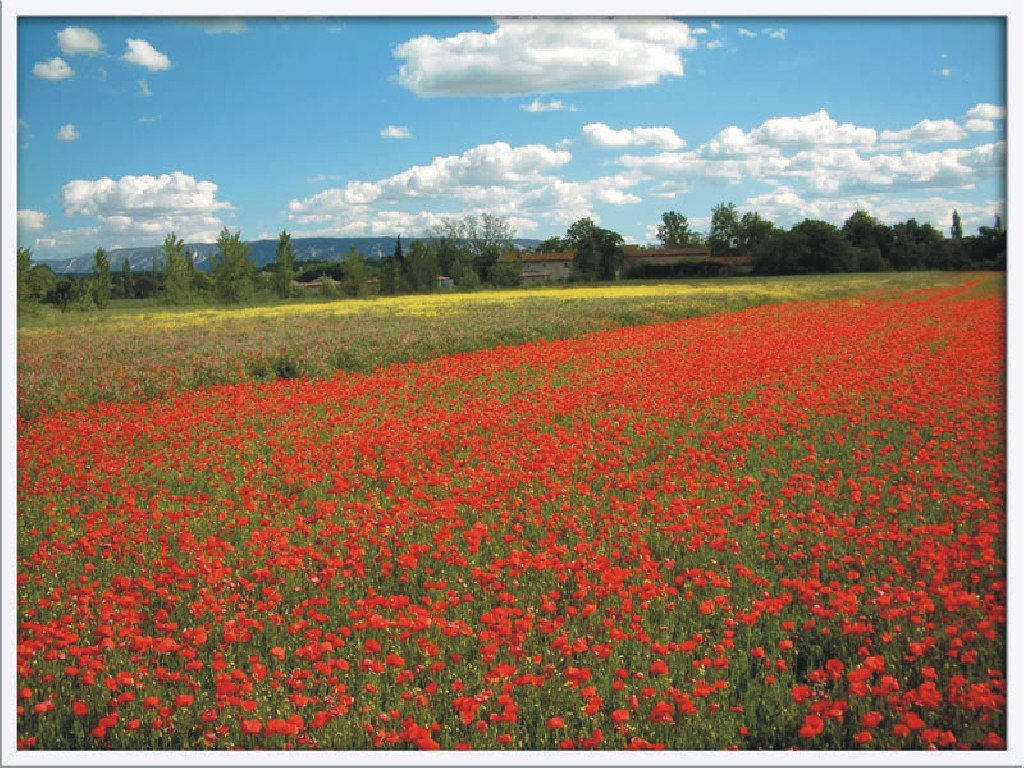
    poppiesI was late in getting my Poppy this year – I didn’t actually buy it until yesterday (Saturday) morning, when I purchased one from a gentleman in Hillsborough whilst on my Saturday morning Odyssey known as ‘the weekly shop’.  I get a British Legion Poppy every year – I’m afraid I don’t have much truck with the White Poppies that are available – and wear it proudly.

    My grandfather fought in World War 1 – I barely remember him as he died when I was 5 years old, but I’m here because he was lucky enough to be captured rather than killed on the first day of the Battle of the Somme in 1916.  My mother wasn’t conceived until after the First World War, so I regard myself as a lucky bod to just be here.

    One observation I made to the gentleman from whom I bought my poppy was that I am of an age to be part of a ‘blessed generation’ of young men – for much of the last 2 decades the UK has had troops overseas in combat theatres – especially in recent years we’ve become used to seeing coffins coming home from the same places ‘east of Suez’ that the generation of young soldiers who fought in World War 1 would have been familliar with.  My generation avoided this; our only war was the Falklands War – perhaps the last of the old style national wars before we got drawn in to the sequence of international coalitions and wars against terror that have been a feature of the world since teh fall of teh Berlin Wall.

    British troops in World War 1 noticed that the most prominent wild flowers to sprng up each year on the battlefields were Poppies.  The reason for this is simple enough; poppy seeds lay in the soil until the soil is broken up and disturbed; then they’ll start growing.  Today we can occasionally get this effect when ground is broken up for building excavations.  Historically, the effect was noticed by many authors over the hundreds of years in which Flanders was a battlefield.   In Flanders the breaking up was done by digging trenches, shelling, the carving up of the ground by wagons and tanks and running feet.

    And the excavation of earth for graves.

    And the latter inspired Major John McCrae to write possibly the most famous (and my favourite) poem from World War 1 after being responsible for the burial of a fellow Canadian officer at the Second Battle of Ypres in 1915.  McCrae himself would not see peace; he died of pneumonia in 1918.  The poem is ‘In Flanders Fields’:

    In Flanders fields the poppies blow
    Between the crosses, row on row,
    That mark our place; and in the sky
    The larks, still bravely singing, fly
    Scarce heard amid the guns below.

    We are the Dead. Short days ago
    We lived, felt dawn, saw sunset glow,
    Loved and were loved, and now we lie
    In Flanders fields.

    Take up our quarrel with the foe:
    To you from failing hands we throw
    The torch; be yours to hold it high.
    If ye break faith with us who die
    We shall not sleep, though poppies grow
    In Flanders fields.

    Three verses; observation, remembrance and a call to duty.  Our attitudes towards concept such as duty and honour have become cynical over the years, and it’s perhaps only around this time of year that we remember these men for whom it was important enough to lay down their lives.  Some suggest that we should stop remembering WW1 when the last combatant dies; I disagree.  We should step up and catch that thrown torch of honour, courage and duty and not break faith with those who fell in Flanders Fields.

    November 8, 2009
  • The ‘Why should I give a fuck?’ award for today goes to….

    CircuspaintingOK – first of all apologies for the title.  It’s just that the trivial background behind this post made me very angry this morning.  I may just be having a grump, heading for a cold or suffering from fast-food overdose, but I guess I’m allowed to throw a strop occasionally.

    So, what was it that generated the bile?  It was the headline on ‘The Sun’ newspaper.  Something about ‘2 Brits win Euro Lottery’.  Like I said in the title ‘Why should I give a …?’  Genuinely.  This matters to the people who won, their families, possibly their communities.  It’s not really a matter of national importance worthy of large headlines on the same day that other news stories include:


    • The shooting dead at Fort Hood of 13 people and the wounding of 30+ others
    • The possibility that all of the new proposals for managing MP’s Expenses will not be introduced
    • The UK Government is saying that it’s unlikely that a legally binding climate treaty will be worked out at Copenhagen
    • Three ex-Chief of Staffs have criticised Gordon Brown for his support of UK troops.

    But what’s more important, according to the tabloid press, is 2 anonymous Brits winning a lottery.  I suppose that I should be grateful that it’s not being held up as another great British victory over the perfidious Europeans to match Agincourt, Waterloo or the Battle of Britain!

    Unfortunately I expect to see more of this sort of thing as the months unfold this winter.  It’s going to be a hard one; we’ll continue supporting a regime as bent as a hairgrip in Afghanistan, we’ll continue being in recession here at home and we’ll no doubt continue witnessing the political establishment carry on trying to worm out of it’s responsibilities.  The Media will rise to the occasion with lots of stories like this, a good few about our new (apparent) National Treasure Cheryl Cole and almost certainly a good number of stories like that about Philip Laing and this latest pair of Chav thugs.  Oh, and don’t forget The X Factor and the rest of the ‘reality’ shows.

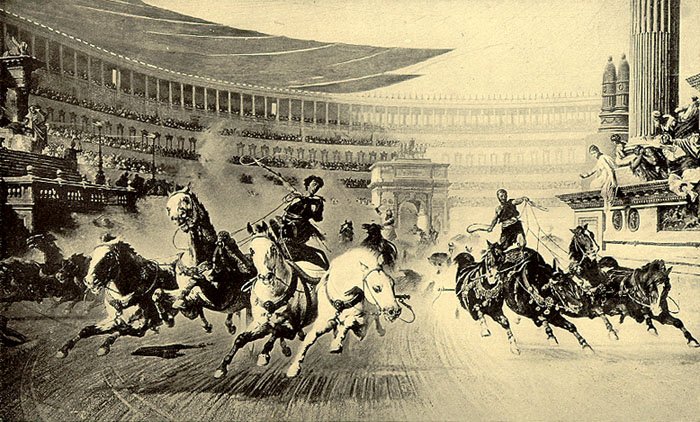
    Years ago, I guess we might have considered this to be a modern application of the old Roman method of keeping the Proletarians happy by liberal application of pannen et circuses – bread and circuses, with cheap credit supplying the bread and the media providing the circuses.  One thing is definitely certain today – the media is able to provide circus entertainment by the bucket full with reality TV, lottery winners, ‘national treasures’ and a good few examples of throwing folks to the lions.

    It’s a shame we haven’t got bread any longer, though – I do wonder how long teh circus will keep the punters distracted when the bills start piling up and the larder starts getting bare.

    November 8, 2009
  • Are you a ‘but’ man?

    sergeantbilkoI was reminded earlier today, whilst reading a book called ‘Life 101’,  of a useful piece of advice from one of the more under-rated personal development gurus of the mid 20th Century – Sergeant Ernest Bilko of the United States Army.  Let’s listen to what he has to say on the topic of a three letter word…

    You said, “but.” I’ve put my finger on the whole trouble. You’re a “but” man. Don’t say, “but.” That little word “but” is the difference between success and failure. Henry Ford said, “I’m going to invent the automobile,” and Arthur T. Flanken said, “But . . .”

    And so it was, according to Bilko, that Ford remains in history whilst Flanken doesn’t even make the footnotes.

    ‘But’ is indeed one of the words in the English language that fills me with trepidation.  During my years in consulting, hearing someone agree with what you were proposing, and then adding the word ‘…but’ (complete with pause) to the end of a sentence was the equivalent of telling me that I was as likely to get cooperation as I was to win the Nobel Prize for Physics and Literature in the same year.

    There some occasions when it’s valuable to pull someone up short before they thunder off and implement some plan or other that at best can be described as ‘unwise’.  And there are times when the use of but can provide a useful reminder for folks that their master plan requires a few tweaks before it will work properly.  But often ‘but’ is used as a prelude to a road-block.

    Rather than ‘but’ I now try and use ‘and’ or ‘or’ instead of ‘but’ – then rephrase the part of teh sentence after the old ‘but’ to look towards solutions.  For example:

    I’d like to buy a new computer, but it costs too much.

    becomes

    I’d like to buy a new computer, and in order to give me time to save the extra money, I’ll put the purchase off for a month and see if I can do some overtime in the meantime to help raise the extra cash.

    The first sentence becomes, in the but-less second sentence, an intention with a timescale and a partial solution to the problem of money.  As the guys at Honda say, ‘and’ is a great little word – it opens up opportunities for solutions, rather than closing things down.

    Don’t be a but-nik!

    November 7, 2009
  • All hail the scapegoats!

    scapegoatIn ancient Jewish society, the scapegoat was a normal goat that was ceremonially loaded with all the sins of the community, and then driven from town in to the wilderness, as part of the ceremonies around the Day or Atonement.  The goat would almost certainly die in the desert, and with it would die the sins of the community.  The term has passed in to general usage, as we all know, to refer to someone who gets to carry the can when the crap hits the fan.

    Earlier today I blogged on the topic of Philip Laing, the student in trouble here in Sheffield, and was reminded of a comment made by my better half about whether the venom being expended towards this fellow was actually a form of scapegoating.  We’ve had over two years of miscellaneous nonsense here in the UK – the banking crisis, MP’s expenses, the Recession, the War in Afghanistan and Iraq – the list goes on.  Then conveniently along comes someone who we can all have a go at, who isn’t rich and powerful and who’s actually done something that is pretty damn stupid and manages to annoy vast numbers of people.

    In fact, the perfect scapegoat!

    Here’s a quick guide for you to help you play ‘Spot the Scapegoat’ – a useful parlour game for this winter preceding a general election when we can expect the Government and Media to try and blame anyone and everyone  – except the genuine culprits – for the wrongs of the world.

    Plausibility

    A scapegoat must be plausible.  there’s little point in picking on someone totally innocuous.  You need someone or a group of people who’ve been bad, been caught out, and for whose behaviour there can be little excuse.  Little old ladies caught exceeding the speed limit by 5 miles per hour don’t really meet the requirement. 

    Powerless

    An ideal scapegoat would be suitably powerless.  After all, we don’t want them coming back at us, do we?  Really powerful people will rarely become scapegoats unless they’ve upset some even more powerful people.  The media don’t want to upset someone with muscle who could make the media look like horse’s bottoms.

    Scalability

    Having found a plausible, powerless person to act as scapegoat, their bad behaviour has to be ‘scalable’.  Scalability is a technical term for the ability of a system to cope with heavier loads than expected without needing a lot of work.  So, if we want a good scapegoat on which we can unload a pile of public anger, the scapegoat’s behaviour must be something that can be ‘worked up’ in some way.  So, Mr Laing’s offence can easily be used to indicate that it’s the start of the end of Western Civilisation as we know it as respect for all that is good in society declines, etc. 

    Publicity

    If you want a good scapegoat, they have to be public figures or elevated in to the rank of public notoriety by the media or the Internet.  If you can get a good gossipy campaign going, apparently driven by the general public, you’re in clover.

    No apologies

    Your perfect scapegoat should ideally be photographed with a black cloak and a Victorian moustache, eating babies and shouting that they are sorry for nothing.  If this ideal scenario can’t be achieved, then a lack of apology will do.  If the scapegoat attempts a half-arsed apology, all the better.  But if they go for the genuine apology, their value as a scapegoat is diminished.

    Have something ready to sneak out

    Apart from deflecting blame from the real culprits, the exposure and persecution of a good scapegoat can offer the Government and other people of power and influence the opportunity to sweep other things under the carpet.  If you have a scapegoat, never waste the opportunity to get a few bad-news stories out at the same time.

    November 6, 2009
  • ‘A butterfly on a wheel’

    laingThe phrase ‘A butterfly upon a wheel’ was used in originated in piece of writing by Alexander Pope in the Eighteenth Century, but was popularised by Sir William Rees-Mogg in a Times editorial in July 1967 in which he railed against the jailing of Mick Jagger and Keith Richards on a drugs charge.

    His piece finished with “If we are going to make any case a symbol of the conflict between the sound traditional values of Britain and the new hedonism, then we must be sure that the sound traditional values include those of tolerance and equity. It should be the particular quality of British justice to ensure that Mr. Jagger is treated exactly the same as anyone else, no better and no worse. There must remain a suspicion in this case that Mr. Jagger received a more severe sentence than would have been thought proper for any purely anonymous young man.”

    And so we fast forward 42 years to the story of Philip Laing, a 19 year old Sports Science student from Sheffield Hallam University who was incredibly daft in two ways; he urinated on a wreath on a war memorial, and was photographed doing it. 

    My own view on his behaviour is that it was absolutely disgraceful; whether he deliberately set out to urinate on a wreath is a debatable point; I have no idea one way or another – but the bottom line is he committed a profane act on sacred ground, something frowned upon in all civilised society since Ugg the caveman decided to bury the body of his best friend rather than leave it for the vultures.

    There is no excuse; there’s no excuse for using any street as a toilet, and to be honest he or his friends colleagues (one of which was obviously sober enough to take a photo) should have known, even in a drunken state, that there are certain places you don’t pass water on. 

    Enough – I can go on for a long time about the fact that to me it’s desecration of the memory of the dead, and that the chap should be punished. 

    What the punishment IS, however, is the point of this piece.   In the last few weeks I’ve seen some serious vitriol poured out about this young man on the two local forums here in Sheffield and on Facebook.  Indeed, I was told to ‘get a life’ because I dared to suggest that any form of urination in public for an adult is inappropriate.  I’ve seen people suggest that guy should be tortured, executed, thrown out of college.   I had the feeling that were it possible, his lands would be ploughed with salt, his house reduced to ashes (and then ploughed in as well), a sign saying ‘the glory is departed’ hung over the wreckage and he and his line cursed unto the Seventh Generation.

    The judge at his trial yesterday said that a prison sentence is a possibility.  OK folks…STOP!

    Isn’t this all getting out of hand?  If he’s jailed, will South Yorkshire Police be expected to arrest any drunken oik who urinates in the street with a possible result that the drunk ends up filling up a prison cell likely to be needed for a more serious crime?  Despite the emotions raised here, we do not have a crime of desecration in English Law.  For example – grave robbery tends to be treated as a particularly unpleasant form of theft, breaking headstones as vandalism or, in some cases, racially aggravated crimes. The closest we have in terms of a law that applies to this sort of thing is the Military Remains Act that covers war graves – that’s typically used to stop folks looting sunken ships and other designated ‘war graves’ for souvenirs and such.  No matter how deplorable and ill-advised his behaviour, this youth committed an act of vandalism on the wreath, and a public order offence. 

    What might be appropriate?  Send him down from University for 3 years; have him pay a suitable fine and then have him spend some time cleaning our war memorials.  Appropriate punishment, I feel.

    And perhaps, whilst we’re at it, we might invite the the company who organised the event to make a contribution from their profits to the British Legion as an apology. 

    Oh…and whilst we’re at it…perhaps determine whether such events should require special licensing permission from the City Council?

    November 5, 2009
  • When Ministers are right to fire advisors

    nutt_bbcnewI think it’s safe to say that these days I rarely agree with the behaviour of Government Ministers.  Part of it is a knee jerk reaction (:) ) and part of it is that Government Ministers rarely seem to exhibit a capability in their jobs above that of Jim Hacker – without the aid of Sir Humphrey.  But, much to my dismay, I found myself agreeing with the Home Secretary with regard to the firing of his Drug’s Advisor, Professor David Nutt.  Now,  I have no intention in getting in to the rights and wrongs of Cannabis classification or whether illegal drugs are more dangerous than alcohol and tobacco.  My thoughts here are on teh roles and responsibilities of advisers.

    It’s inevitable and highly desirable that Ministers will have access to a wide range of advisers to help them and their departments come to policy decisions.  The role of any advisor is to advise;  that statement may appear to be a tautology but it seems that some advisers believe their role is to actually make policy.  It isn’t.  When a Government policy fails, it’s incumbent on the Minister to fall on his or her sword.  (OK…that’s how it should be, but I appreciate that that doesn’t happen much these days!)  the advisor responsible for giving the advice that led to a policy being made is almost certainly going to be unknown to the public.  The process is that the advisor gives their advice, the Civil Servants and the Ministers and Secretaries chew it over, and eventually the Minister decides and takes it to Cabinet for approval.

    It’s similar to some of the consultancy work I do – I (as Advisor) am briefed on a problem by my client (Minister).  I advise the client to the best of my professional abilities, and the client then takes the choice to go with my recommendations as given, implement part of what I suggest or use my consultancy report to line his cat’s litter tray.  I obviously hope that it won’t be the latter.

    But that’s the prerogative of the client, whoever they are – to take or not to take your advice.  Whilst you’re on the payroll you may argue your case strongly within the confines of the organisation, but if you don’t get what you want you have two – and ONLY two – choices.  Shut up or quit.

    That is all – if you feel very strongly about your advice not being taken then the only intellectually honest and principled thing to do is to quit the job.  As a consultant I’ve done it maybe once or twice in 20 odd years.  My own thoughts were that there was no point in me being paid and giving advice if it was never taken, I felt I was just taking money for nothing, so I quit.

    What you don’t do is mouth off to teh media or outside the organisation in a way that’s likely to get attention whilst you’re still employed.  That is, in my opinion, disloyal.

    For me, the role of an advisor is like that of an Executive Officer on a ship.  You advise the Captain, you may even question the Captain’s decision, but once that decision has been made you fulfill whatever duties you have in making that decision work.  If you can’t, then ask for a transfer or ersign your commission; don’t try and organise a mutiny.

    November 4, 2009
←Previous Page
1 … 29 30 31 32 33 … 39
Next Page→

Twenty Twenty-Five Legal Pad

Designed with WordPress